

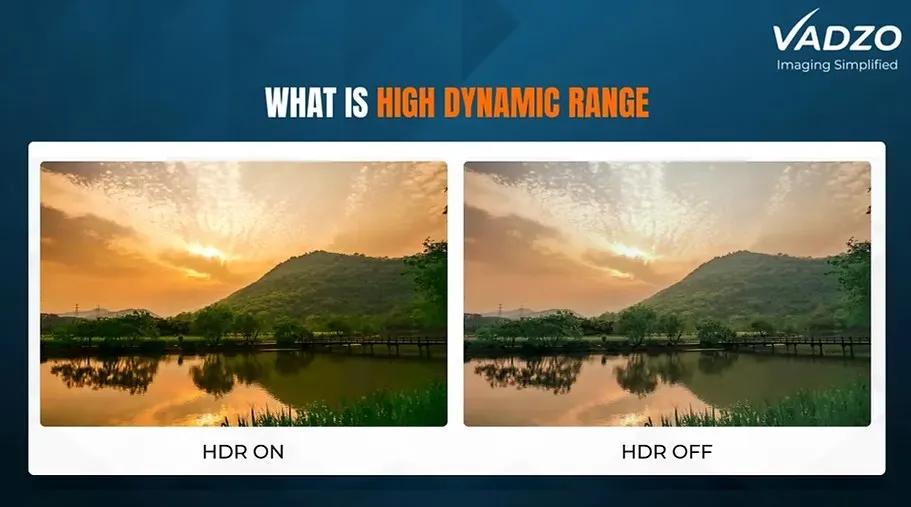
High Dynamic Range
Modern imaging applications demand exceptional image quality in challenging lighting conditions. From industrial automation and intelligent transportation systems to surveillance and machine vision, cameras must capture clear details across bright and dark areas within the same scene. This is where high dynamic range imaging plays a critical role.
High dynamic range (HDR) technology enables cameras to capture a broader range of light intensities, ensuring better visibility and image accuracy. Companies like Vadzo Imaging provide advanced imaging solutions designed to deliver reliable performance in demanding environments where lighting conditions constantly change.
What is High Dynamic Range?
High dynamic range refers to a camera’s ability to capture details in both extremely bright and extremely dark areas of an image simultaneously. Traditional cameras may lose detail in shadows or overexpose bright regions, resulting in incomplete image information.
HDR imaging helps overcome these challenges by balancing exposure levels and preserving important details across the entire image.
Benefits of high dynamic range imaging include:
Improved image clarity
Better contrast management
Enhanced visibility in challenging lighting
More accurate image analysis
Reliable performance in dynamic environments
Industries relying on machine vision and automated inspection increasingly use HDR cameras to improve operational accuracy and efficiency.
Importance of HDR in Industrial Applications
Industrial environments often present complex lighting conditions. Reflective surfaces, varying brightness levels, and rapidly changing environments can affect image quality.
High dynamic range technology helps applications such as:
Industrial automation
Quality inspection
Traffic monitoring
Smart city infrastructure
Robotics
Security systems
Medical imaging
By capturing greater image detail, HDR imaging supports more accurate decision-making and improved system performance.
HDR and Global Shutter Technology
When discussing advanced imaging systems, global shutter technology is often paired with HDR capabilities.
A global shutter captures all pixels in a sensor simultaneously. Unlike rolling shutter systems that scan images line by line, global shutter technology eliminates motion distortion and image artifacts.
Advantages of global shutter cameras include:
Distortion-free image capture
Accurate motion analysis
Improved object tracking
Better performance for high-speed applications
Consistent image quality
When combined with high dynamic range functionality, global shutter cameras provide exceptional image accuracy even in fast-moving and high-contrast environments.
Vadzo Imaging offers imaging solutions designed to meet the requirements of industrial automation, machine vision, and intelligent imaging applications where precision is essential.
Benefits of Power over Ethernet Camera Solutions
Another important advancement in modern imaging systems is the power over ethernet camera. These cameras simplify installation by transmitting both power and data through a single Ethernet cable.
Benefits of power over ethernet camera technology include:
Simplified Installation
Using a single cable reduces wiring complexity and lowers deployment costs.
Reliable Connectivity
Ethernet-based communication provides stable and secure data transmission.
Flexible Deployment
Power over ethernet camera systems can be installed in locations where traditional power sources may be difficult to access.
Reduced Infrastructure Costs
Fewer cables and accessories help minimize installation expenses.
Centralized Management
Network-based camera systems are easier to monitor, configure, and maintain.
These advantages make PoE cameras popular in industrial facilities, surveillance networks, transportation systems, and smart infrastructure projects.
High Dynamic Range in Machine Vision
Machine vision systems rely on accurate image capture to perform inspections, measurements, and automated decision-making. Poor lighting conditions can negatively impact image processing results.
High dynamic range technology improves machine vision performance by:
Preserving image details
Reducing glare effects
Enhancing object recognition
Improving defect detection
Supporting accurate measurements
When combined with global shutter sensors and power over ethernet camera technology, HDR imaging creates a powerful solution for advanced vision systems.
Why Choose Vadzo Imaging?
Vadzo Imaging provides advanced imaging solutions designed for industrial, scientific, and embedded vision applications. The company's product portfolio focuses on delivering:
High-quality image capture
Reliable performance
Advanced sensor technologies
Industrial-grade durability
Seamless integration capabilities
Whether implementing machine vision systems, robotics platforms, or intelligent monitoring solutions, Vadzo Imaging supports organizations with innovative camera technologies tailored to modern imaging requirements.
Conclusion
High dynamic range technology has become an essential feature in modern imaging systems. By improving image quality in challenging lighting environments, HDR enables more accurate analysis and better operational performance.
When combined with global shutter technology and power over ethernet camera solutions, HDR cameras provide outstanding image clarity, efficient deployment, and reliable operation. Vadzo Imaging continues to support industries with advanced imaging solutions that help organizations achieve greater accuracy, efficiency, and performance in demanding applications.
FAQs
1. What is high dynamic range imaging?
HDR imaging captures details in both bright and dark areas of a scene simultaneously.
2. What is a global shutter camera?
A global shutter camera captures all image pixels at the same time, reducing motion distortion.
3. What is a power over ethernet camera?
A PoE camera transmits power and data through a single Ethernet cable.
4. Where is HDR imaging commonly used?
HDR is used in industrial automation, machine vision, surveillance, and transportation systems.
5. Why is HDR important for machine vision?
HDR improves image quality, object detection, and inspection accuracy in varying lighting conditions.